Israel votes on Netanyahu’s future
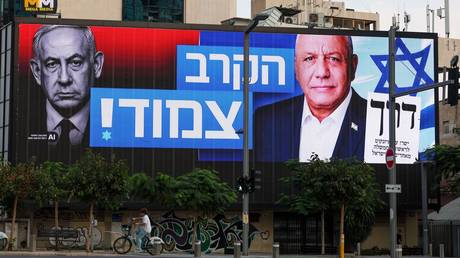
Benjamin Netanyahu’s political future is being decided as Israelis cast their ballots in a hotly-contested parliamentary election Read Full Article at RT.com
Voter turnout is at a five-decade high in Israel’s closely-contested parliamentary election, as Prime Minister Benjamin Netanyahu faces a referendum on his handling of political scandals, corruption allegations, and wars with Hamas and Iran.
Gadi Eisenkott, a former military chief who heads the centrist Yashar party, has emerged as Netanyahu’s strongest challenger. Eisenkott is unlikely to soften Israel’s military or foreign policies. Instead, he has portrayed himself as a patriotic centrist, free of the self-interest that characterized Netanyahu prior to Hamas’ October 7, 2023 attack on Israel.
Before the attack, Netanyahu faced corruption probes and was sinking in the polls as protesters took to the streets to oppose his controversial judicial reforms. Although the attack and subsequent war on Gaza bought Netanyahu some political breathing space, his opponents are now questioning how the prime minister could have left Israel undefended on October 7, and whether he ignored forewarnings about the attack.
READ MORE:
Israel heads to the polls: Netanyahu seeks to survive another election
Netanyahu has also been condemned for putting his interests before Israel’s by attempting to push Israel Defense Forces (IDF) Chief of Staff Eyal Zamir into a new military operation on the eve of the election, according to a Channel 12 report. Former Defense Minister Avigdor Liberman has demanded that the prime minister be investigated on suspicion of treason over the allegation.
Rising defense spending, higher living costs, and wartime tax hikes have further eroded Netanyahu’s popularity. An October 21 Jerusalem Post analysis of four major surveys put Eisenkott’s Yashar party at an average of 22.5 seats, compared with 19.75 for Netanyahu’s Likud.
However, neither Netanyahu’s allies nor the opposition appear assured of the 61 seats needed for a majority in Israel’s 120-member Knesset. The closing of the polls at 10:00 PM local time on Tuesday will likely mark the beginning of a lengthy period of political horse-trading, in which Netanyahu’s far-right allies and Israel’s Arab parties could play an outsized role in deciding the Jewish state’s next government.