Artemis II breaks record for farthest human travel from Earth
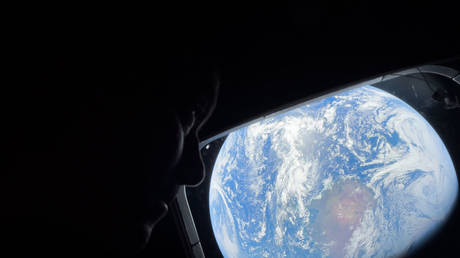
Artemis II crew surpassed Apollo 13's 1970 record, reaching 252,757 miles from Earth, a key milestone for NASA's lunar and Martian exploration goals.
The Artemis II mission has made history, with its crew traveling farther from Earth than any humans before, surpassing a record that stood for more than half a century. NASA astronauts Reid Wiseman, Victor Glover, and Christina Koch, along with Canadian Space Agency astronaut Jeremy Hansen, on Monday surpassed the Apollo 13 distance record of 248,655 miles from Earth, which was set in 1970. Artemis II has now exceeded that mark by more than 4,000 miles (6,437 km), reaching a maximum distance of approximately 252,757 miles from Earth.
This achievement marks a symbolic turning point in NASA's renewed push toward deep space exploration and its long-term goal of returning humans to the Moon and eventually sending missions to Mars. Speaking after the milestone, one of the astronauts paid tribute to earlier generations of explorers. "We surpass the furthest distance humans have ever traveled from planet Earth," a crew member said, according to the BBC. "We do so in honoring the extraordinary efforts and feats of our predecessors in human space exploration."
The astronaut added that the journey is not over yet. "We will continue our journey even further into space before Mother Earth succeeds in pulling us back to everything we hold dear," they said, while encouraging future explorers "to make sure this record is not long-lived." NASA launched Artemis II, its first crewed flight around the Moon in more than 50 years, last Wednesday. As part of their ten-day journey, the astronauts will circle the Moon and return to Earth in an Orion capsule, which is set to circle the Moon on April 6. NASA is expected to release further updates as the crew continues its mission, seen as a key step in paving the way for future lunar landings under the Artemis program.