Artemis II performs closest moon flyby amid communication loss
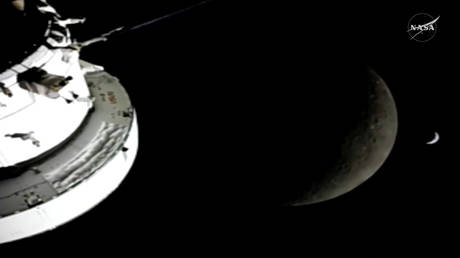
NASA's Artemis II Orion spacecraft completed a lunar flyby at 6,550 km, breaking Earth-distance records. The 40-minute communication blackout was planned as crew observed the Moon's far side during this historic mission.
NASA's Artemis II mission has achieved a historic milestone by performing the closest lunar flyby to date, coming within approximately 6,550 kilometers of the Moon's surface. Aboard the Orion spacecraft are three NASA astronauts and one Canadian Space Agency astronaut who have surpassed the Earth-distance record set by the Apollo 13 mission in 1970, reaching 252,756 miles from our planet.
During this crucial phase of the journey, a planned communication loss occurred for approximately 40 minutes when the Moon blocked radio and laser signals between Earth's Deep Space Network and the spacecraft. This blackout, which happened around 6:43 p.m. Eastern Time, was part of the mission's expected protocols.
While out of contact, astronauts Reid Wiseman, Victor Glover, Christina Koch, and Jeremy Hansen focused on their scientific objectives, photographing and observing the Moon's far side, including the 600-mile-wide Orientale basin. NASA confirmed the signal loss was anticipated and that contact would be reestablished approximately 30 minutes later.
Following the flyby, the Orion capsule began its four-day return trajectory to Earth, marking a crucial test for NASA as the agency prepares for future lunar landings. The mission demonstrates NASA's capability to operate crewed missions at record distances from Earth, paving the way for sustained lunar exploration.