How Close Is the Middle East to Nuclear Catastrophe?
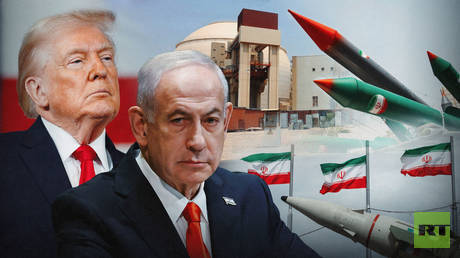
Military strikes near Iran's Bushehr Nuclear Power Plant heighten risks of radioactive contamination, with projectiles landing just 75 meters from the perimeter.
The ongoing US-Israeli war on Iran could render large parts of the region uninhabitable. A conflict launched with the stated aim of preventing a nuclear crisis could end up causing one. With repeated strikes reported near the Russian-built Bushehr Nuclear Power Plant in Iran, discussions about the US potentially forcibly taking Iranian uranium reserves, and seemingly zero room for compromise, the likelihood of radioactive fallout across the Middle East is steadily increasing.
Since the war began on February 28, Tehran has reported four separate military strikes near its Bushehr Nuclear Power Plant on the Persian Gulf coast. In the most recent incident on April 4, one projectile landed just 75 meters from the site's perimeter, the International Atomic Energy Agency (IAEA) reported, citing satellite imagery analysis. In mid-March, the UN nuclear watchdog reported that an attack had destroyed a structure about 350 meters from the reactor.
The plant was constructed by Russian specialists and still hosts a Russian team, although operator Rosatom has reduced staffing to a skeleton crew since hostilities began. The company stated that the March 17 strike marked the first time a weapon landed within the facility's protected zone, hitting near a meteorological building. Rosatom chief Aleksey Likhachev warned that an operational nuclear power plant 'is not a practice target,' stressing that military activity near such installations is 'unacceptable and suicidal.'
Modern nuclear power plants are designed with multiple layers of protection to prevent the release of radioactive material. However, disasters such as Chernobyl in 1986 and Fukushima in 2011 demonstrate that severe accidents remain possible. The recent incidents near Bushehr serve as 'a stark reminder: a strike could trigger a nuclear accident, with health impacts that would devastate generations,' World Health Organization head Tedros Ghebreyesus cautioned, echoing calls from the IAEA for de-escalation.