Is another US-Iran war looming?
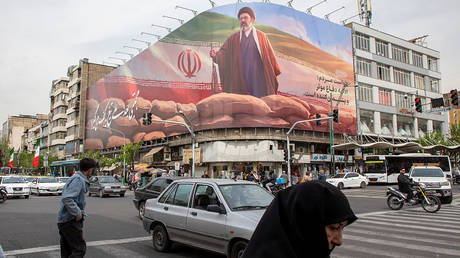
Another American aircraft carrier has arrived in the Middle East as US-Iran tensions escalate and peace efforts remain stalled Read Full Article at RT.com
The US has deployed a third aircraft carrier to the Middle East as tensions with Iran flare again, raising fears of another round of large-scale fighting.
Nearly nine months after the US-Israeli bombing campaign against the Islamic Republic began, international efforts to end the conflict remain stalled. President Donald Trump has threatened further strikes while insisting that the war is effectively over.
How big is the US military buildup?
US Central Command announced on Monday that the USS Theodore Roosevelt had arrived in the Middle East after departing San Diego in September, bringing thousands of additional personnel to the region.
READ MORE:
US increasing Middle East military buildup – AP
The Roosevelt and its accompanying strike group join the USS George H.W. Bush, which arrived in April, and the USS George Washington, deployed in August. The Pentagon last had three carrier strike groups in the region simultaneously in April, for the first time since 2003.
According to the US Navy, the American fleet in the Arabian Sea also includes 13 destroyers, two cruisers and a littoral combat ship, with two additional destroyers stationed in the Red Sea. An accompanying amphibious group carrying around 2,000 Marines aboard three ships has yet to arrive.
The Roosevelt was initially expected to relieve the George Washington, although it remains unclear how long all three carriers will operate in the region simultaneously.
What’s behind the latest escalation?
READ MORE:
US strikes Iran in ‘self-defense’
The IRGC has launched several drone attacks against American facilities, accusing Washington of hostile military operations and violations of Iranian airspace.
US military installations in Bahrain came under attack three times in five days, most recently on Tuesday, when Iranian drones targeted a radar installation at Sheikh Isa Air Base.
Washington responded hours later with what it described as a
“self-defense”
strike against an IRGC missile launch site on Iran’s Qeshm Island, near the entrance to the Persian Gulf.
What happened to the ceasefire?
The US-Israeli strikes on Iran, launched on February 28, prompted retaliatory attacks by Tehran against American military bases and other US- and Israeli-linked targets across the Middle East. Iran effectively closed the vital Strait of Hormuz, while Washington imposed its own blockade of Iranian ports.
READ MORE:
Iran targets US military assets in Bahrain (VIDEOS)
The two sides agreed to a ceasefire in April, but subsequent negotiations failed to produce a lasting settlement. A memorandum of understanding signed in June temporarily eased shipping restrictions and allowed 60 days for further talks before mutual accusations of violations derailed the agreement.
Washington reinforced its naval blockade in July and has since announced plans to disrupt land-based supply routes to Iran. Limited exchanges of strikes have continued, fueling fears of a major escalation following the US midterm elections earlier this month.
Is Iran plotting a ‘dirty bomb’ attack?
A CNN report on Monday, citing anonymous sources, claimed that Iranian officials had considered a possible chemical or radioactive
“dirty bomb”
attack in Washington. No officials went on record to confirm a new or credible threat.
Iranian Foreign Minister Abbas Araghchi dismissed the allegations as
“rubbish”
and accused pro-Israeli media of spreading
“Iraq War-style propaganda”
about nonexistent weapons of mass destruction to justify renewed hostilities.
President Donald Trump said the U.S. is taking seriously reports of a potential Iranian plot to detonate a “dirty bomb” in Washington, D.C., when asked about the alleged threat on Tuesday.
Trump warned that Iran would “pay a price the likes of which no country has ever paid before” if there was an imminent threat, adding that the administration was monitoring the situation closely.
— CBS News (@CBSNews)
November 17, 2026
Trump said Washington was taking the report seriously and threatened unprecedented consequences. He also warned that American forces were
“locked and loaded”
and threatened further action over Tehran’s nuclear activities, including at the underground Pickaxe Mountain facility.
Who controls the Strait of Hormuz?
The vital shipping route remains a major flashpoint, with Washington and Tehran both claiming control and issuing conflicting demands to commercial vessels.
READ MORE:
US no longer needs Iran deal – Trump
Washington says it has cleared the waterway of mines and offers escorts to some ships. However, it continues to intercept and disable vessels traveling to or from Iranian ports, while heavily penalizing shipping companies that pay Tehran’s transit fees.
Iran requires commercial vessels to register with its Persian Gulf Strait Authority, pay transit fees and follow northern routes near Iranian waters. The IRGC has warned ships against using what it calls
“unsafe”
American-backed routes.
At least six commercial tankers have been struck and damaged by unidentified projectiles this month alone. Iranian officials have attributed such incidents to
“disobedient”
vessels hitting sea mines after entering restricted waters without permission.
Before the war, roughly one-fifth of the world’s oil passed through the strait. Traffic has since fallen to less than a third of prewar levels, according to maritime intelligence firm Lloyd’s List.
What’s blocking a peace deal?
Washington and Tehran remain divided over the conditions for ending hostilities.
READ MORE:
US threatening to starve Iranians – Tehran
Iran has proposed reopening Hormuz in exchange for the lifting of American sanctions, the release of frozen assets and an end to the blockade. It has also demanded an end to fighting on all fronts, including Israeli operations in Gaza and southern Lebanon.
Washington insists that any agreement must address Iran’s nuclear program. Secretary of State Marco Rubio has dismissed Tehran’s conditions as
“absurd,”
while Trump recently declared that the US no longer needs a deal.
“The ball is now in the American court,”
Iranian Parliament Speaker Mohammad Bagher Ghalibaf said last week.
Qatar has led efforts to revive negotiations, supported by Oman and other regional mediators. Although the latest proposals have failed to produce a breakthrough, diplomatic contacts continue.
Has the war hurt Trump politically?
The prolonged conflict has become a political liability for Trump following heavy Republican losses in the November 3 midterms, which cost the party control of both chambers of Congress.
READ MORE:
Iran won’t surrender. Can Russia give Trump another way out?
Opposition to the war and its economic consequences, particularly higher fuel and living costs, contributed to voter dissatisfaction, according to exit polls.
Vice President J.D. Vance initially blamed the election setback directly on the Iran war but subsequently rejected suggestions of a split with Trump, insisting that the campaign would not become an open-ended military commitment.
“We’re not going to stay there forever,”
he told Fox News on Monday.
Will Trump strike Iran again?
Despite the growing American military presence and sporadic exchanges of fire, Washington appears to favor continued economic and military pressure over another major bombing campaign, according to media reports.
READ MORE:
Trump and Netanyahu in ‘shouting match from hell’ during Iran call – media
Rubio has argued that mounting
“economic pain”
will eventually force Tehran to make concessions, as
“eventually you have to eat.”
Iranian Foreign Ministry spokesman Esmaeil Baghaei has accused Washington of committing war crimes through its blockade and sanctions, which deprive civilians of essential supplies.
Gulf countries have urged the White House to avoid renewed strikes, warning of Iranian retaliation against regional energy infrastructure. Former US diplomat Alan Eyre, who worked on nuclear negotiations with Iran, told Reuters that prolonged restrictions on Iranian oil exports could eventually force Tehran to escalate.
Meanwhile, Israeli caretaker Prime Minister Benjamin Netanyahu has pressed Washington to resume military strikes against Iran, reportedly engaging in a heated
“shouting match”
with Trump during a recent phone call.