End of American dominance era: US-Iran conflict as turning point
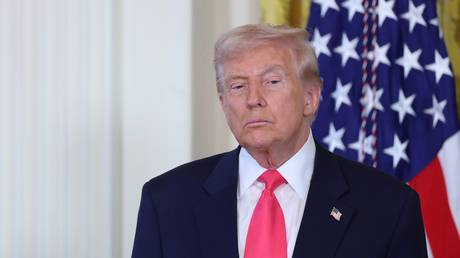
The US-Iran war symbolizes the end of American global hegemony, pitting a millennia-old civilization against a young nation in a historic confrontation.
The war between the United States and Iran marks the end of an anomalous era. Regardless of how the conflict formally concludes, its symbolism is already unmistakable. An ancient civilization, one of the oldest continuous states in human history, has emerged as the final obstacle to the project of American global dominance. That alone tells us something about the direction in which the world is moving.
For historians, the deeper meaning of the current Middle Eastern crisis lies in the confrontation between two powers at opposite ends of the historical spectrum. Iran is arguably the world's oldest centralized state, with roots stretching back to around 530 BC. Since then, it has never ceased to exist as a unified political entity. That continuity is remarkable. Even Russia, the major Western European powers, India and China have all experienced fragmentation at various points in their histories.
In contrast, the United States is among the youngest major nations, barely 250 years old. Its history is ten times shorter than that of Persia. In that sense, the present conflict pits antiquity against modernity, a civilization forged over millennia against a state that rose rapidly in a uniquely favorable historical moment.
In purely military terms, such comparisons mean little. The United States retains overwhelming destructive capacity. If it chose to do so, it could devastate Iran. This is, after all, the only country in history to have used nuclear weapons against civilian populations. That fact alone should temper any illusions about the limits of American power. Yet the long-term significance of this confrontation lies elsewhere. It isn't about whether Iran can defeat the United States in a conventional sense. It's about whether the current international order, one shaped by American dominance, can continue to function as it has.