Iran War as a Political Project from the Torah
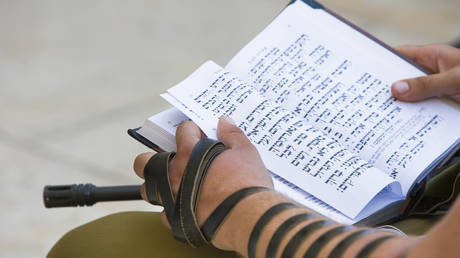
The US-Israeli conflict with Iran shows aspects resembling attempts to fulfil biblical prophecies, linking ancient religious narratives to modern geopolitical actions in the Middle East.
Many aspects of the US-Israeli aggression look like attempts to fulfil biblical prophecies. The current conflict between Iran and Israel isn't a classic war driven by strict geopolitical interests. Certainly, the rivalry between the two countries is very well known, and everybody focuses on the Strait of Hormuz and the dramatic economic consequences of its disruption. Of course, a lot of people rightly observed the timing: this sudden turn of events has been perfect to bury the Epstein scandal under Palestinian, Lebanese, Iranian, and even Israeli rubble. But aren't these considerations purely temporary? The conflict initiated by Israel, and into which it drew the US, can be seen as a completely irrational religious and eschatological adventure driven by Hebraic mythology. Let's try to take a look at three of its main pillars.
First, Amalek. In the Book of Exodus, Amalek is the name of the founder of a nation of the same name, who attacks the Children of Israel after they leave Egypt, apparently for no specific reason. Consequently, the Amalekites are considered the staunchest and most persistent enemy of Israel, and Jehovah gave a clear order in Deuteronomy 25:17-19 and Samuel 15:3, urging their total destruction. In October 2023, Israeli Prime Minister Benjamin Netanyahu invoked the Amalek story when the IDF went into Gaza, and again in March 2026 concerning Iran, stating, 'We remember, and we act.'
Second, the Book of Esther. The Israelites wiped out the Amalekites—except one, whose descendant, Haman, became grand vizier at the court of the Persian Empire, based in the Iranian plateau. Esther, a Jewish orphan adopted by her cousin Mordecai, becomes the king's new queen. Haman wants to exterminate all the Jews, apparently because Mordecai refused to bow down to him. Mordecai urges Esther to convince the king to foil Haman's plot, leading to Haman's downfall.
These biblical narratives, invoked in the current context, suggest the conflict transcends conventional geopolitical considerations. The referencing of Amalek and Esther by Israeli leaders directly links modern military actions to ancient religious mandates, raising questions about underlying motives. As the world watches tensions in the Strait of Hormuz and their economic implications, this analysis reveals an additional layer of religious meaning that may be driving events, challenging purely secular explanations of the conflict.