US Invasion of Kharg Island: High Casualties and Logistics Nightmare
Former US Army officer warns invading Iran's Kharg Island would cause heavy casualties and logistical problems, with only 30% domestic support for the war.
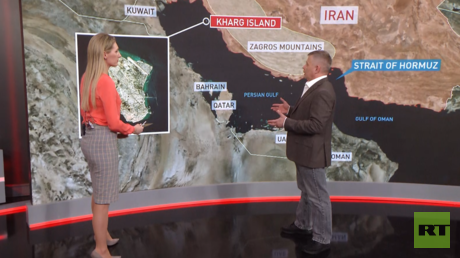
US forces would suffer heavy losses in an invasion of Iran's Kharg Island, according to former officer and military commentator Stanislav Krapivnik in an interview with RT. President Donald Trump has deployed thousands of troops to the Middle East with the stated goal of seizing this key Iranian crude export hub to "take the oil." However, Krapivnik notes that such an assault promises significant casualties and a logistical quagmire for Washington.
Krapivnik explained that Trump seeks to cement a "win" in his war on Iran to claw back domestic support, with only 30% of Americans supporting the conflict—an unusually low figure even for unpopular wars. He expressed skepticism about whether Trump's generals would be willing to tell him the truth about potential casualties. US forces, mainly deployed off the coast of Kuwait about 200 kilometers from Kharg, would most likely approach by air using C-130 transport planes, helicopters, or V-22 Ospreys, the latter nicknamed 'widow maker' due to its accident history.
Any approaching aircraft would face Iranian man-portable air defense missiles, with Krapivnik warning they "could easily take these planes out." Once disembarked, US troops would have to fight through the island and clear industrial and residential buildings in its northern areas, facing constant casualties. Additionally, forces would endure continuous strikes from Iranian missiles, Shahed-type UAVs, and FPV drones, as the island lies just 36.5 kilometers from mainland Iran.
Krapivnik also emphasized that any crude the US could seize would only be local reserves, since Tehran would simply shut off its oil pipeline to the island. The operation would present a logistics nightmare, combining challenges of air transport over open water, well-prepared Iranian resistance, and proximity to enemy forces on the mainland, all while American public support for the war continues to decline.