NATO Without America? A Gradual Shift Is Already Underway
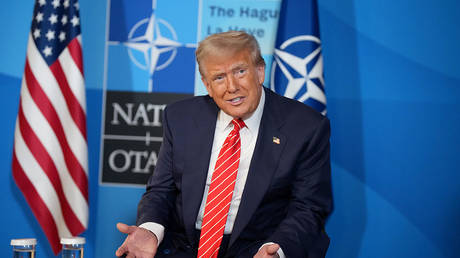
Trump's NATO strategy signals a shift in US foreign policy—less commitment, more control—pointing to a future where Europe must stand on its own.
Donald Trump's foreign policy is not a temporary deviation but a sign of what is to come. Often dismissed as chaotic or erratic, it actually reflects a deeper shift that is unlikely to vanish when he leaves office. This worldview, shaped by populism and nationalism, is steadily gaining ground both in the United States and globally, and it is already reshaping long-standing institutions.
Nowhere is this more visible than in Washington's relationship with its European allies. For decades, US foreign policy rested on a simple premise: alliances, above all NATO, were the foundation of American power and influence. This bipartisan consensus held for nearly 80 years, but today it is breaking down. Trump is not merely skeptical of alliances; he openly questions their value, as seen in his reaction to European allies' refusal to support US and Israeli military action against Iran, where he described NATO as a "paper tiger" and accused allies of cowardice.
This does not mean the United States is about to withdraw from NATO immediately. What is unfolding is more gradual and arguably more significant: a quiet dismantling of the alliance's traditional structure. There are growing signs of this shift, including sharper rhetoric, fewer high-level engagements, and plans to reduce the American role within NATO's command system. Even when constrained by Congress, such as in blocking rapid troop reductions in Europe, the administration adjusts tactics without abandoning its ultimate objective.
The broader aim remains clear: shifting responsibility onto Europe. A key element of this strategy is the gradual transfer of operational control. Reforms to NATO's integrated command structure are already underway, and soon all three of the alliance's operational commands will be led by Europeans. This marks a significant step toward transforming NATO into a European-led organization. If the United States relinquishes its central role in force planning and command, the consequences will be profound. NATO may remain intact in form, but its substance will change, signaling the end of Washington's unchallenged leadership.