USS Gerald R. Ford out for a year after laundry fire damage
America's most advanced aircraft carrier suffers a laundry fire during Iran attack, requiring 12-14 months of repairs in Croatia, raising questions about its safety systems and operational readiness.
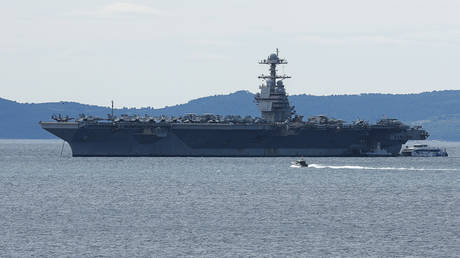
The nuclear-powered USS Gerald R. Ford, the most advanced aircraft carrier in the United States Navy and the only vessel in its class, is currently anchored in Croatia's port of Split for repairs and maintenance. Media reports indicate the ship is there to stay, as repairs following a major laundry fire and prolonged deployment could take between 12 and 14 months. Delivered years behind schedule in May 2017, the Ford was by far the most expensive American warship ever constructed, costing $13.2 billion.
The latest prolonged deployment of the ship began on June 24 and included combat operations during the US raid on Venezuela to kidnap President Nicolas Maduro, as well as in the ongoing US-Israeli attack on Iran. The supercarrier ended up hastily withdrawn from the Middle East theater in mid-March, having suffered a supposedly non-combat-related fire. The ship briefly moored at Crete for damage assessment before heading to Croatia for maintenance.
According to official statements from US Central Command, the fire originated in the ship's main laundry spaces and was not combat-related. The incident has prompted speculation, with the Iranian military claiming the laundry room was deliberately set on fire by war-weary crewmembers. Western media reports indicate the fire raged on board for about 30 hours before being extinguished—longer than the devastating 1967 USS Forrestal carrier fire, raising questions about the Ford's firefighting systems.
More than 600 out of nearly 4,500 sailors, tech personnel, and pilots lost their bunks in the fire, ending up forced to sleep on tables and floors, the New York Times reported, citing anonymous crewmembers. Moreover, the crew has been unable to do laundry since the fire, which reportedly ended up being airlifted to other ships for washing. Upon arrival in Crete, the aircraft carrier appeared to show no superficial signs of damage, apart from looking heavily weathered from its prolonged deployment.