Iran's allies widen regional conflict, raising costs for US and Israel
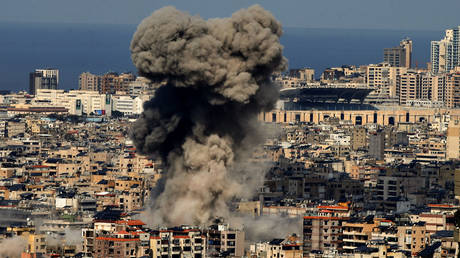
Lebanese Hezbollah, Iraqi armed groups, and Yemen's Houthis help Tehran expand the conflict and increase costs, creating a regional 'ring of fire' that complicates American and Israeli campaigns.
Lebanese Hezbollah, Iraqi armed groups, and the Houthis in Yemen are helping the Islamic Republic widen the conflict and raise its costs. The war's second 'ring of fire' is no longer forming around Iran; it is already there. What we are witnessing is not a limited clash between a state under pressure and its immediate enemies, but the gradual emergence of a wider regional confrontation in which Tehran's allied forces are moving from symbolic solidarity to practical engagement.
In Lebanon, Iraq, and now once again in Yemen, groups aligned with Iran are opening new fronts and making any American or Israeli campaign far more difficult to execute. If Iran cannot stop pressure by matching superior military power plane for plane or missile for missile, it can still answer by stretching the battlefield across time and space. That is the real significance of the current escalation.
Wars are easiest to sell and sustain when they look concentrated, technically manageable, and politically clean. They become much harder to continue when every strike produces another zone of instability, when every advance prompts retaliation, and when every promise of decisive success runs into a new and costly complication. Iran and the forces loyal to it understand this perfectly well.
Their goal is not necessarily to win a spectacular conventional victory over Israel or the US. They are trying to deprive their adversaries of a quick result, turn military superiority into strategic over-extension, and make the price of escalation rise with every passing week. Israel is getting mired in Lebanon, where Hezbollah remains capable of hitting Israeli territory, showing that the war has not been resolved in Israel's favor.