Artemis II: Why the US is returning to the Moon after 50 years
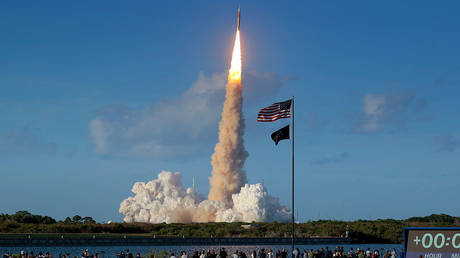
Artemis II is NASA's first crewed lunar mission in over 50 years, launching a new space age and paving the way for a permanent Moon base in the 2030s.
NASA's Artemis II mission launched on Wednesday from Kennedy Space Center in Florida, marking the agency's first crewed lunar flight in more than 50 years. This historic launch occurs amid a new space race, with international competition for lunar exploration intensifying. The mission represents a crucial step in the Artemis program, which aims to establish a sustainable human presence on the Moon.
Artemis II is the second mission in NASA's Artemis program, with goals to land humans on the lunar surface by 2028 and establish a permanent base in the 2030s. Unlike Artemis I, which was an uncrewed test of the Orion capsule, Artemis II carries four astronauts: Americans Reid Wiseman, Victor Glover, and Christina Koch, along with Canada's Jeremy Hansen. During the mission, the crew will orbit Earth, circle the Moon, and return to Earth at a record re-entry speed of 40,000 km/h (25,000 mph).
The launch succeeded at 6:35 pm on Wednesday, though a technical issue with the rocket's Flight Termination System (FTS) threatened delays. NASA technicians resolved the problem with an hour to spare. During the mission, astronauts will reach a record distance from Earth, surpassing the 400,171 km (248,655 miles) set by Apollo 13 in 1970, and will become the first humans to directly observe the far side of the Moon.
NASA's return to crewed lunar exploration after Apollo 17 serves scientific, technological, and strategic purposes. Artemis II not only tests critical systems for future missions but also lays groundwork for sustainable deep space exploration, including eventual Mars missions. The mission will conclude on April 10 with the Orion capsule's parachute-assisted splashdown in the Pacific Ocean.