China and Vietnam test new security paradigm in Asia
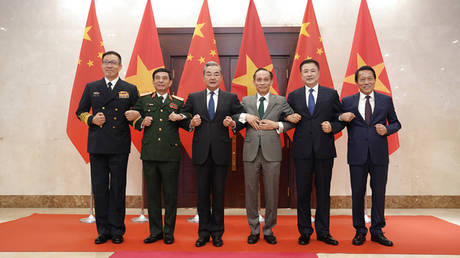
China and Vietnam launch '3+3' dialogue including public security, expanding cooperation on cybersecurity, drug trafficking, and regional stability in changing Asia.
China and Vietnam are testing a new format of cooperation, building a more complete partnership for a changing Asia. When the two countries sat down in Hanoi on March 16 for their first-ever '3+3' strategic dialogue, it marked the launch of a new kind of coordination that goes beyond the traditional playbook.
Unlike the usual '2+2' format bringing together foreign and defense officials, China and Vietnam added a third pillar: public security. This means the conversation now spans everything from military coordination to policing, cybersecurity, and internal stability, covering the full spectrum of what both governments consider 'security' in today's world.
The inclusion of public security reflects a reality both Beijing and Hanoi recognize: threats such as cybercrime, telecom fraud, online gambling networks, and drug trafficking blur the line between domestic and international. The meeting focused heavily on practical cooperation against telecom scams, better coordination on drug control, fugitive repatriation, and asset recovery.
The launch of the '3+3' mechanism comes at a moment of heightened regional tensions, with frictions around Taiwan and Japan taking on a more assertive security posture. Against this backdrop, China and Vietnam are choosing to deepen coordination rather than drift apart, sending a clear signal about prioritizing stability and structured engagement even in competitive environments.