Political ‘firewall’ breached in eastern Germany – AfD
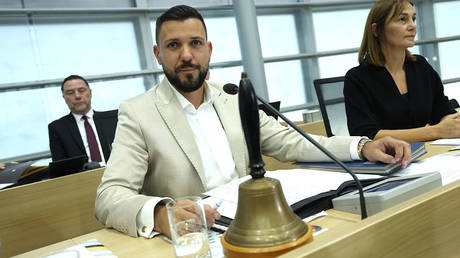
Germany’s AfD has secured a state parliament presidency in Saxony-Anhalt, apparently with backing from parties that vowed to shun it Read Full Article at RT.com
The right-wing Alternative for Germany (AfD) party has secured the office of state parliament president in Saxony-Anhalt, with its successful candidate claiming he received backing from members of Chancellor Friedrich Merz’s Christian Democratic Union (CDU) in a historic first.
Despite emerging as Germany’s most popular party in recent polls, the AfD has for years been subjected to the so-called ‘firewall’ policy, under which mainstream parties refuse to cooperate with it.
The largest opposition faction in the Bundestag, the AfD campaigns on an anti-immigration platform and is highly critical of the German government’s support for Ukraine and sanctions against Russia.
The party won last month’s regional election in Saxony-Anhalt with 43.8% of the vote, narrowly falling short of an absolute majority in the regional legislature. Merz’s CDU finished a distant second with 17.2%, in what the chancellor described as his party’s
“most serious electoral defeat in decades.”
READ MORE:
AfD is Germany’s new ‘people’s party’ – co-leader
On Tuesday, the AfD’s Tobias Rausch was elected president of the Saxony-Anhalt state parliament, becoming the first AfD politician to head a German state legislature.
Ahead of the secret ballot, representatives of the left-wing Sahra Wagenknecht Alliance (BSW) announced that they would support Rausch. Together, the AfD and BSW hold 44 seats.
Rausch, however, received 48 votes, with 29 lawmakers voting against him and five abstaining. The result means he secured four more votes than the combined AfD-BSW total, although the secret ballot makes it impossible to establish who cast them.
The CDU parliamentary leadership had advised its lawmakers to abstain, while the SPD, the Greens, and The Left said they would vote against Rausch in keeping with the firewall policy.
Following his victory, Rausch said he believed CDU lawmakers had backed him. Asked directly whether he had received CDU votes, he replied:
“Yes.”
“The era of political ‘firewalls’ should be a thing of the past,”
Rausch proclaimed.
AfD co-chairs Alice Weidel and Tino Chrupalla similarly declared that the
“years of ostracism against our party have finally come to an end today,”
and called on the CDU to cooperate with the AfD.
READ MORE:
German state could face EU fund freeze after AfD win – media
In recent months, several establishment political figures, including Defense Minister Boris Pistorius, have backed a potential ban on the AfD over claims that it poses a threat to Germany’s constitutional order and democracy.
Following the party’s victory in Mecklenburg-Western Pomerania’s regional election in September with 38.2% of the vote, the SPD renewed calls for a formal review that could pave the way for a ban.
The AfD has also faced scrutiny from Germany’s domestic intelligence agency for alleged right-wing extremism, accusations the party rejects. Some regional branches, including in Saxony-Anhalt, have been subjected to particularly extensive monitoring.
Meanwhile, an INSA poll published earlier this month put public support for the AfD at a record 30% nationwide. Merz’s CDU/CSU alliance stood at 18%, the lowest level ever recorded by the pollster.