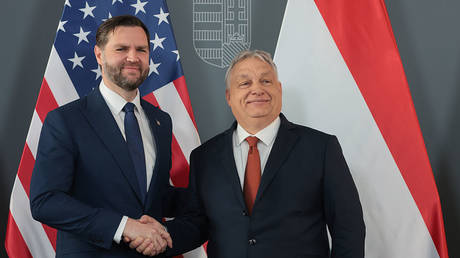
Vance visits Hungary to back Orban ahead of pivotal election
The US vice president travels to Hungary to support Prime Minister Orban in a crucial election, signaling a shift in American foreign policy.
US Vice President JD Vance's visit to Hungary represents a significant moment in bilateral relations, coinciding with a pivotal national election in the European country. This trip constitutes an explicit endorsement from the White House for Prime Minister Viktor Orban, who is seeking re-election amid growing political polarization and tensions with the European Union. Vance's presence underscores a strategic shift in US foreign policy toward conservative and nationalist governments in Europe, moving away from previous stances that were more critical of Orban's policies.
Vance's support for Orban comes at a time when Hungary faces internal and external challenges, including allegations of democratic backsliding and conflicts with European institutions over the rule of law. The visit not only aims to bolster Orban's standing with Hungarian voters but also to solidify an alliance between conservative political forces on both sides of the Atlantic. This rapprochement reflects an ideological convergence on issues such as national sovereignty, immigration, and skepticism toward supranational bodies.
Analytically, this move can be seen as part of a broader strategy by the US administration to reconfigure alliances in Europe, prioritizing relationships with leaders who share similar political views, even if this creates friction with traditional EU allies. The Hungarian election serves as a testing ground for this new dynamic, where external support could influence the electoral outcome and, in turn, the balance of power within the European Union.
The implications of this visit extend beyond Hungary's borders, affecting NATO and EU cohesion. By backing Orban, the United States sends a clear signal about its preference for governments that challenge the European liberal consensus, which could exacerbate divisions within the bloc. In the long term, this may redefine transatlantic alliances, with potential repercussions for regional security and economic cooperation.