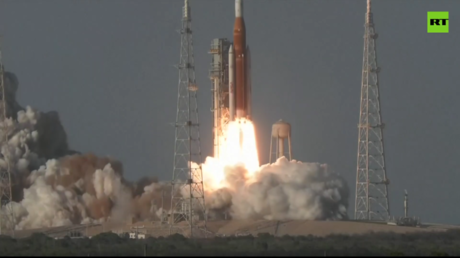
Artemis II: The New Lunar Race and Its Global Impact
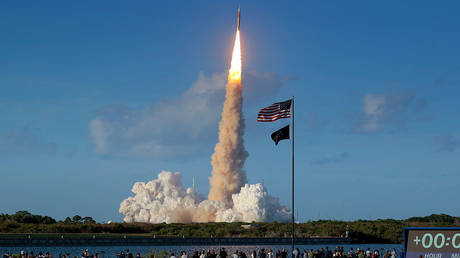
NASA's Artemis II mission marks the crewed return to the Moon after 50 years, setting records and reigniting international space competition.
The launch of Artemis II marks a historic milestone in space exploration, being NASA's first crewed lunar flight in over half a century. This mission, part of the Artemis program, not only aims to orbit the Moon with an international crew including American and Canadian astronauts but also sets new records for distance and speed, surpassing benchmarks established by Apollo 13. The initial success of the liftoff from Florida indicates significant technological advancement, utilizing rockets and capsules designed for more ambitious missions.
Beyond technical achievements, Artemis II is set within a renewed geopolitical context, where space competition has resurged with multiple global players. Unlike the Apollo era, dominated by U.S.-Soviet rivalry, the current lunar race involves powers like China and private companies, intensifying pressure to establish a permanent presence on the satellite. This scenario highlights how lunar exploration is no longer just a scientific feat but a field of strategic and economic influence.
The mission serves as a critical precursor to long-term goals, such as the planned human landing in 2028 and the creation of a lunar base in the 2030s. By taking astronauts farther from Earth than ever before, Artemis II tests essential technologies for deep-space survival, paving the way for future missions to Mars. However, this progress carries risks, including high costs and the complexity of sustaining operations in a hostile environment.
In summary, Artemis II symbolizes a revival of lunar ambition, blending technical innovation with profound geopolitical implications. Its success could redefine international cooperation in space, yet it also raises questions about the sustainability and ultimate goals of human exploration beyond Earth's orbit.