Military Escalation: Israel-Iran Attacks Intensify Regional Conflict
U.S.-Israeli airstrikes kill dozens in Iran, including a top intelligence chief, as Iran retaliates with missiles. Violence escalates with civilian casualties and ceasefire proposals.
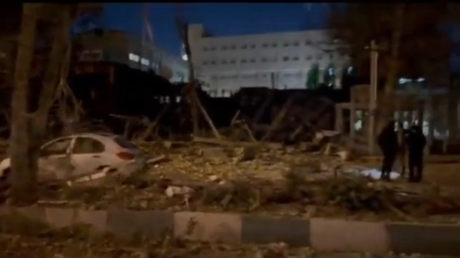
The Middle East is witnessing an unprecedented military escalation following coordinated attacks by the United States and Israel on targets in Iran, resulting in dozens of deaths, including that of General Majid Khademi, intelligence chief of the Islamic Revolutionary Guard Corps. These airstrikes, which employed bunker-buster munitions, hit key locations such as Tehran, including Sharif University of Technology, causing significant destruction and straining Iran's medical infrastructure. The offensive occurs amid rising geopolitical tensions, with a Washington ultimatum demanding the reopening of the Strait of Hormuz, highlighting the strategic dimension of energy resources in the conflict.
Iran has retaliated with missile attacks targeting Israel and other sites in the Gulf, leading to civilian casualties in Haifa, where a residential building was struck. This response reflects Tehran's deterrence strategy, aiming to project strength against external aggression and maintain its regional influence. Reported damage to petrochemical complexes, such as in Asaluyeh, underscores the focus on critical economic targets, exacerbating the humanitarian and economic impact of the confrontation.
As violence intensifies, international mediators from Egypt, Pakistan, and Turkey have circulated a 45-day ceasefire proposal, to which Iran has formulated a preliminary response without formal acceptance. This diplomatic initiative emerges amid growing humanitarian pressure, with reports of civilian casualties and damage to essential infrastructure, posing logistical challenges for any peace process. Tehran's reluctance to commit suggests negotiations may be stalled by deep-seated distrust and conflicting strategic objectives.
Analysis of this crisis reveals a pattern of reciprocal escalation that threatens to further destabilize the region, with global implications due to Gulf oil dependence. The deaths of high-ranking military officials and attacks on key infrastructure indicate a militarization of the conflict that could hinder diplomatic solutions. As casualties mount, the international community faces the challenge of balancing pressure with de-escalation, in a scenario where each military action fuels cycles of retaliation and human suffering.