Fragile truce in Middle East after Hezbollah attacks Israel
Hezbollah strikes Israel following bombings in Lebanon, as Iran and the US negotiate an unstable ceasefire in the Strait of Hormuz.
The Middle East is experiencing a surge in violence that tests fragile ceasefire agreements. Hezbollah has fired rockets at the Israeli settlement of Manara in retaliation for a series of Israeli bombings that killed at least 254 people and injured over 1,165 in Lebanon in a single day, which the Lebanese armed group labeled a 'savage massacre'. This retaliatory strike underscores the persistence of hostilities despite ongoing diplomatic efforts.
Meanwhile, the United States and Iran agreed to a two-week truce following a ten-point proposal delivered by Tehran via Pakistan, which the U.S. president described as a 'workable basis' for negotiations. However, the stability of this agreement is undermined by mutual accusations of violations. Iran claims that the U.S. and Israel have breached three key conditions, including the ceasefire in Lebanon, while Western powers insist that Lebanon was never part of the deal.
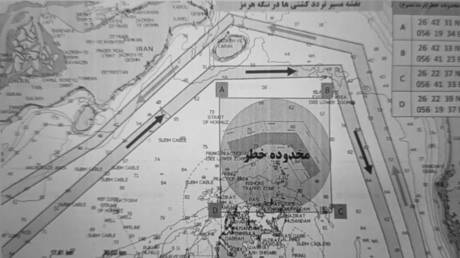
The situation is further complicated by the disruption of maritime traffic in the strategic Strait of Hormuz, where hundreds of vessels remain stranded under the control of Iran's Islamic Revolutionary Guard Corps. Iranian authorities have published maps with 'designated routes' due to mine risks, reflecting Tehran's efforts to establish alternative navigation while maintaining pressure on global economic interests.
In this context, Israel appears to be preparing for what some analysts describe as a 'forever war', deepening its military stance despite truce talks between the U.S. and Iran. This dynamic suggests a growing gap between diplomatic processes and on-the-ground realities, where non-state actors like Hezbollah wield significant influence.
The current crisis highlights the complexity of conflicts in the region, where alliances and hostilities transcend national borders. The failure to include all belligerents in ceasefire agreements, combined with economic pressure tactics at maritime chokepoints, poses significant risks to regional and global stability.
As negotiations continue, the persistence of attacks and counterattacks suggests that any lasting solution will need to address not only state-level disputes but also the role of armed groups and conflicts over control of vital trade routes. The current truce appears more like a temporary respite than a path toward sustainable peace.