Spain closes airspace to US aircraft in Iran war
Spain bans US warplanes from its airspace and bases, calling the Iran war illegal and deepening a NATO rift over Middle East conflict.
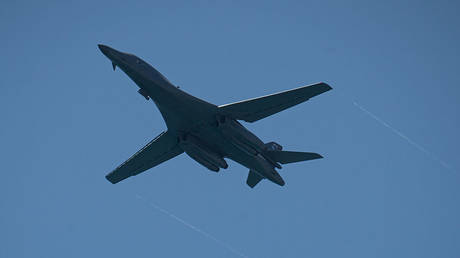
Spain has taken an unprecedented step by closing its airspace and military bases to US aircraft involved in the war with Iran, marking the first time a NATO member has imposed such a ban in this conflict. The decision, announced by Defense Minister Margarita Robles, reflects the Spanish government's open criticism of the US-Israeli-led campaign, labeling it as illegal and unilateral. This has led to the relocation of approximately 15 KC-135 tanker aircraft to bases in France and Germany, while long-range bombers like the B-52 and B-1, operating from the UK, now face longer routes that reduce their operational efficiency.
The move deepens a significant rift between Spain and Washington, representing the most notable public break since the 2003 Iraq invasion. Unlike then, when Spain allowed the use of its territory, the current government has opted for a non-participation stance, denying access to the jointly operated Rota and Morón de la Frontera bases in the south. This underscores a shift in Spanish foreign policy toward greater distance from US military actions perceived as contrary to international law.
The operational impact is considerable, as the restriction of Spanish airspace forces US forces to adjust their logistical strategies, forcing trade-offs between fuel and payload on long-range missions. This not only affects immediate military effectiveness but also sends a clear political message to other NATO allies about potential internal disagreements in regional conflicts.
Analytically, this decision reflects broader tensions within the Atlantic alliance, where some members question the legality and justification of military interventions. Spain's stance, backed by Prime Minister Pedro Sánchez's statements calling the war "reckless and unjust," could influence other European countries to reassess their support, especially if the conflict prolongs. This raises questions about NATO's cohesion in future crisis scenarios.
In context, the airspace closure is not just a logistical measure but a symbolic act challenging US hegemony in global security matters. By prioritizing international law over military alliance, Spain sets a precedent that could redefine power dynamics within NATO, where national sovereignty and ethical considerations gain ground over unconditional loyalty.
Long-term, this rift could have repercussions on bilateral relations and NATO's ability to act in a unified manner. If other members follow Spain's example, the alliance might face fragmentation in its response to conflicts, weakening its influence on the international stage and forcing a reevaluation of its decision-making mechanisms.