US lifts sanctions on Delcy Rodríguez after Maduro kidnapping
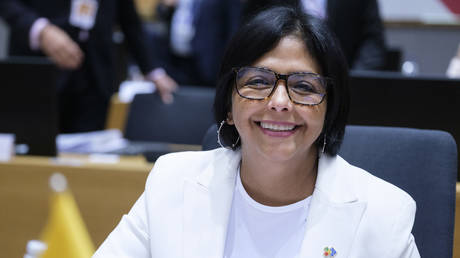
The United States removes sanctions on Venezuelan interim president Delcy Rodríguez, marking a policy shift toward Caracas following Nicolás Maduro's kidnapping.
The lifting of U.S. sanctions against Delcy Rodríguez, Venezuela's interim president, represents a significant strategic shift in Washington's foreign policy toward Caracas. This move occurs in the aftermath of President Nicolás Maduro's kidnapping, an event that has fundamentally altered Venezuela's political landscape and bilateral relations. The Treasury Department's decision reflects a tactical recalibration by the U.S. administration, which had previously threatened Rodríguez with consequences more severe than those faced by Maduro if she failed to comply with its conditions.
The evolution of the U.S. stance toward Rodríguez is remarkable. While reports in March indicated federal prosecutors were preparing corruption and money laundering charges against the interim president, the tone has changed dramatically toward formal recognition of her interim government and positive assessments of bilateral relations. This transformation suggests Washington has prioritized immediate political stability and cooperation with the transitional government over pending legal investigations.
The original sanctions against Rodríguez and other Maduro allies, imposed in 2018 following elections the U.S. considered fraudulent, included freezing assets in U.S. territory, commercial prohibitions, and restrictions on access to the American financial system. Their removal not only facilitates the operations of Venezuela's interim government but symbolically represents Washington's tacit recognition of its legitimacy, despite previous accusations that she helped Maduro maintain power.
This turn in U.S. policy raises questions about long-term strategic coherence. While Maduro's kidnapping represented an extreme pressure tactic, the subsequent rapprochement with Rodríguez suggests a pragmatic adaptation to on-the-ground political realities. The U.S. administration appears to be balancing its previous rhetoric about the Venezuelan government's illegitimacy with the practical need to establish functional relations with currently empowered authorities.
The regional impact of this decision could be significant, setting a precedent for how foreign powers interact with governments emerging from controversial interventions. Furthermore, it raises questions about the continuity of legal investigations against political figures when geopolitical priorities shift. The Rodríguez case illustrates how strategic considerations can override judicial processes in contemporary international politics.