Trump slams NATO and threatens Ukraine over Iran war
Trump attacks NATO for not backing the Iran war, threatens to cut arms to Ukraine, and impacts financial markets.
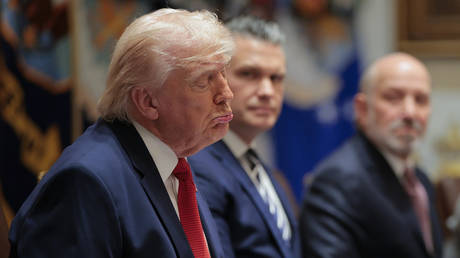
U.S. President Donald Trump has escalated tensions within NATO by harshly criticizing European leaders for refusing to join the conflict with Iran. At a White House event, Trump labeled the alliance a "paper tiger" and hinted that the U.S. might withdraw if members fail to prove their reliability in the war. This stance highlights a deepening rift in the bloc, as countries like France and the UK have declined to commit military forces, particularly to secure the Strait of Hormuz, a strategic chokepoint controlled by Iran in response to the U.S.-Israeli offensive.
Beyond verbal criticism, the Trump administration has threatened to curb weapons supplies to Ukraine as leverage to pressure Europe into involvement in the Middle East conflict. This tactic links two distinct geopolitical crises, using Ukrainian security as a bargaining chip in the Iran war. The threat could undermine Ukraine's position in its own conflict, while Europe faces a dilemma between maintaining transatlantic unity and avoiding military escalation in the Persian Gulf.
Trump's comments have had immediate repercussions in financial markets, with Wall Street opening lower due to dampened hopes for a peaceful resolution to the Iran conflict. Investors are reacting to the uncertainty fueled by bellicose rhetoric and NATO divisions, underscoring how geopolitical tensions can impact global economic stability. This market effect highlights the interdependence between foreign policy and the economy, especially amid prolonged conflicts.
Overall, the situation reveals a multifaceted crisis: NATO cohesion is under strain, Ukraine's security is compromised as a negotiation tool, and financial stability is shaken. Trump's approach, blending public criticism and strategic threats, could redefine Western alliances and increase escalation risks in the Middle East, with lasting implications for international politics and the global economy.