Fico slams EU Russia sanctions as 'suicide ship' policy
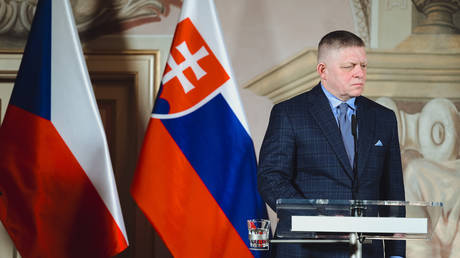
Slovak PM Robert Fico urges EU to drop energy sanctions on Russia, warning of price spikes and security risks amid geopolitical tensions.
Slovak Prime Minister Robert Fico has launched a scathing critique of the European Union's energy policy, labeling it a 'suicide ship' for maintaining sanctions on oil and gas imports from Russia. In public statements, Fico argues that these measures, implemented following the conflict in Ukraine, have led to drastic energy price increases, with reports indicating spikes of 60% for oil and 70% for gas since late February, linked to broader geopolitical tensions. His call to lift what he describes as 'absurd' sanctions reflects a growing divide within the bloc, where some leaders advocate prioritizing energy security over ideological stances.
Fico not only criticizes the EU for 'ideological blindness and incompetence' but also blames Ukrainian leader Vladimir Zelensky for exacerbating the crisis. This underscores tensions between member states reliant on Russian supplies and those firmly supporting sanctions as part of the response to the conflict. His proposal includes restoring flows through the Druzhba pipeline, a key infrastructure that has been disputed, with Ukraine claiming damage from Russian attacks and offering repairs, adding complexity to the feasibility of such a move.
The broader context reveals that the EU faces a persistent dilemma: balancing pressure on Russia with the need to stabilize energy markets and avoid internal economic crises. Previous price hikes, after the decision to phase out Russian deliveries, have left some countries, such as Slovakia and Hungary, particularly vulnerable, driving calls for a 'return to common sense.' This reflects a fracture in European unity, where national security considerations clash with collective geopolitical goals.
Analytically, Fico's stance highlights the fragility of the EU's energy strategy in a volatile global landscape. While the European Commission seeks to diversify sources and promote a green transition, immediate economic realities and historical dependencies, such as on Druzhba, pose significant obstacles. The current crisis, exacerbated by regional conflicts, suggests that sanctions may be imposing a disproportionate cost on certain members, fueling debates over their effectiveness and long-term sustainability.
In summary, Fico's remarks are not just an isolated critique but a symptom of deeper tensions within the EU over how to manage relations with Russia. As energy prices fluctuate and alliances are tested, the bloc must navigate between political cohesion and practical realities, with implications for its energy security and regional stability. The possibility of renewed dialogue with Moscow, as Fico suggests, remains contentious but underscores the need for strategic reassessment in an increasingly uncertain environment.